How To Plan A Kitchen Around The Way You Live
When planning your kitchen remodel or the kitchen in your new custom home, functionality should be at the top of your list. How do you use your kitchen day to day? Do you need separate gourmet prep areas, or would a traditional layout suit you better? The following tips will help you plan a kitchen that serves your whole family, from busy weeknights to entertaining friends.
1. Permitting, Building Codes And Guidelines
Every local jurisdiction has permitting requirements for new construction and remodeling projects. The homebuilder, architect or kitchen designer you hire should understand the regulations in your area and handle the time-consuming submittal and approval process for you. In the Washington, DC area, review times vary from one jurisdiction to the next, so it helps to know how permitting fits into your project timeline.
Building codes exist to keep homes safe, and homeowners are legally required to comply with them. Several code requirements affect kitchen design directly, including structural support when walls are moved or removed, the type and placement of electrical outlets, and plumbing fixtures that meet water-efficiency standards. A professional homebuilder or remodeler will follow the code closely and manage all required inspections throughout your project.
The National Kitchen & Bath Association publishes planning guidelines that design professionals use to make the most of a kitchen’s layout while prioritizing health and safety. Before design work begins, ask your team whether they follow the NKBA guidelines.
2. Traditional versus Workstation Layouts
Kitchens have traditionally been designed around a work triangle, an imaginary line drawn from the center of the sink to the center of the cooktop, on to the center of the refrigerator and back to the sink. This layout remains popular in kitchens of all sizes because it keeps the main work areas close together, and it is especially efficient in compact spaces.
Today’s larger kitchens are often designed with separate workstations for prep, cooking, storage, and cleanup. Each station is centered on a major appliance or a sink, so several people can cook at once without getting in each other’s way, which is common in busy households. Some layouts combine the two approaches, using the triangle for everyday meals and adding a station for baking or beverages. How do you envision using your workspace? Once you settle on a layout, explore our ideas for choosing a kitchen style that fits your personal taste.
3. Island Design
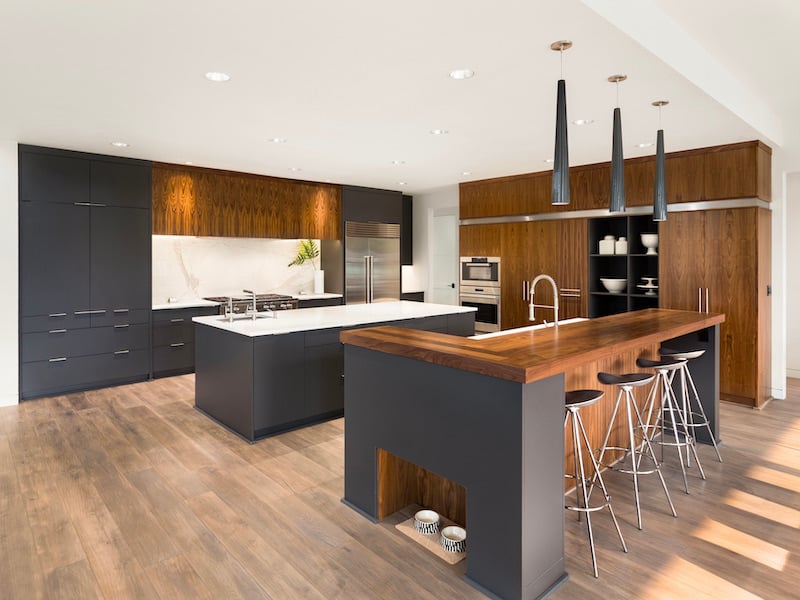
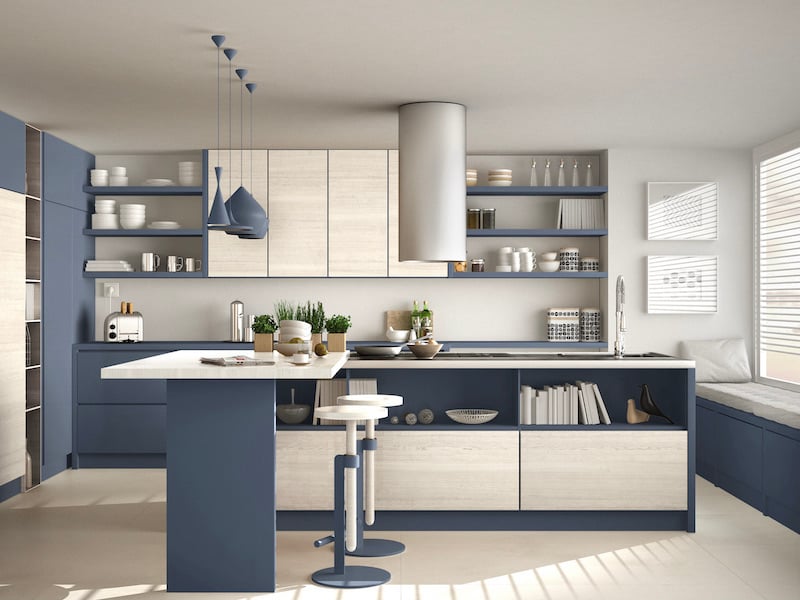
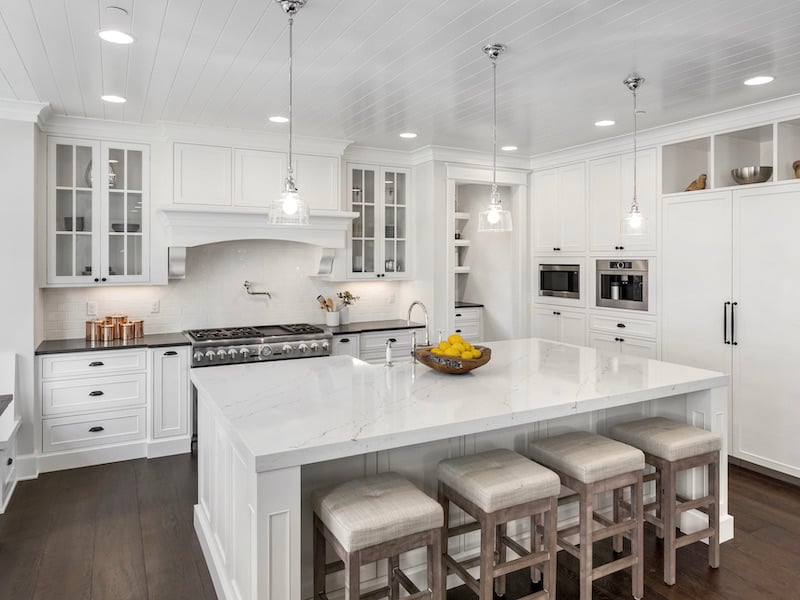
A kitchen island typically provides space for food prep and informal seating, with cabinets underneath for additional storage. It is also a convenient spot for a second dishwasher, beverage center, prep sink, warming drawer, or microwave. Islands can take many forms, from a single flat countertop to multiple heights, and from rectangles to semicircles.
Whatever shape you choose, your island should complement the rest of your kitchen’s design and leave enough room for people to move around it. Plan for at least 42 inches of clearance on all sides, or 48 inches if two or more people regularly share kitchen duties. For seating, allow about 24 inches of counter width per stool and a 12- to 15-inch overhang for comfortable knee space.
4. Appliance Placement And Ventilation
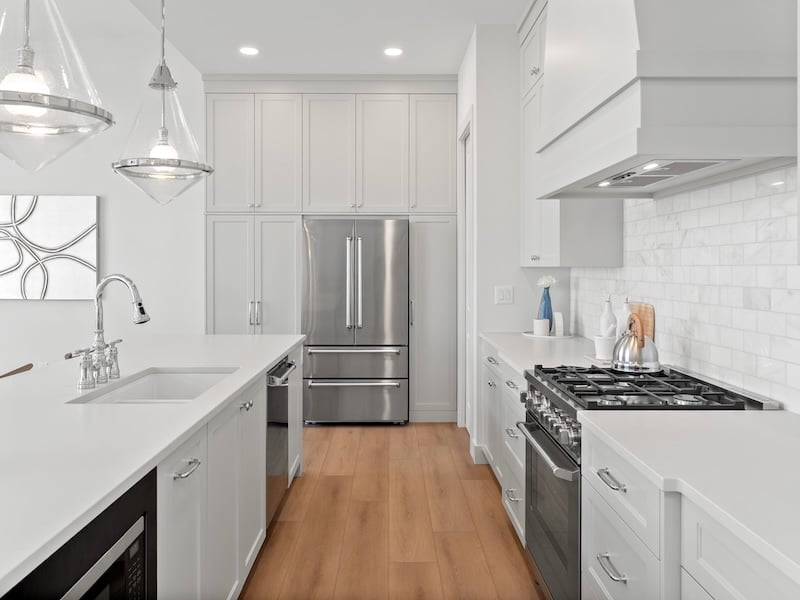
The location of each appliance affects how smoothly your kitchen functions. Leave open countertop next to the refrigerator, cooktop, wall ovens, and microwave so you have a safe place to set down groceries or hot dishes. It also helps to select appliances early, since cabinetry is built to their exact dimensions and gas and electrical lines must be run to each one.
Proper ventilation is just as important. A hood that vents outdoors removes heat, grease, and cooking odors far better than a recirculating model, and it should be at least as wide as the cooktop below it. High-powered hoods may also require a makeup air system, which brings fresh air into your home to replace the air the hood pulls out. For more on cooking appliances and ventilation options, read our guide to choosing a cooktop or range.
5. Organized Storage
With so many styles and colors of cabinetry available, it is easy to focus on appearance, but how your cabinets function matters just as much. Make use of every available inch and store your most-used items close to where you need them.
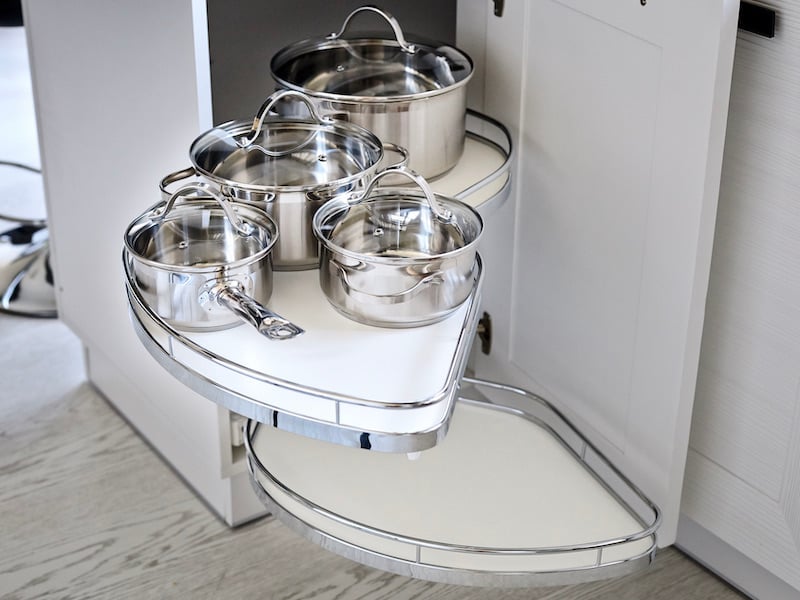
A swiveling lazy Susan brings the contents at the back of a corner cabinet within easy reach. Rollout trays in base cabinets let you see everything at a glance, and deep drawers beside the cooktop should be sized for large pots and pans. Vertical dividers in a narrow cabinet near your prep area keep baking sheets and serving trays neatly sorted, while a pull-out bin next to the sink hides trash and recycling. To compare door styles, finishes and construction, read our guide to choosing kitchen cabinets. For additional storage solutions, see our tips for designing an organized and decluttered kitchen.
6. The Pantry
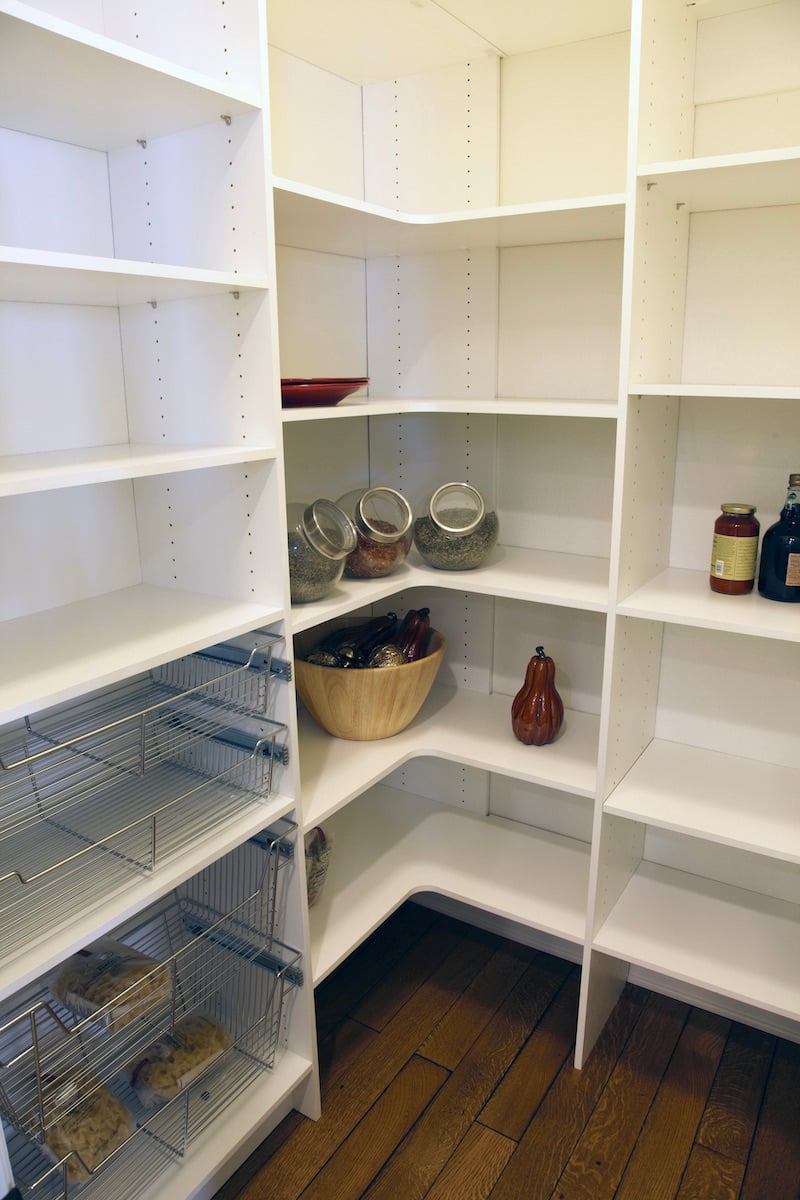
If space allows, a walk-in pantry is an ideal place for food, extra cookware and small appliances. In smaller kitchens, a reach-in closet or a tall cabinet pantry with pull-out shelves can still hold a great deal. Adjustable shelving and bins tailored to your needs give everything a home.
Electrical outlets inside the pantry are a practical addition, providing a dedicated spot to charge a cordless vacuum or the family’s laptops and tablets overnight. They also let you run a coffee maker or toaster oven without crowding the main kitchen. Storing serving platters, party supplies and holiday dishware in the pantry also frees up room in your kitchen cabinets.
7. Lighting
Proper lighting is essential in any kitchen, and layering several types creates the right balance:
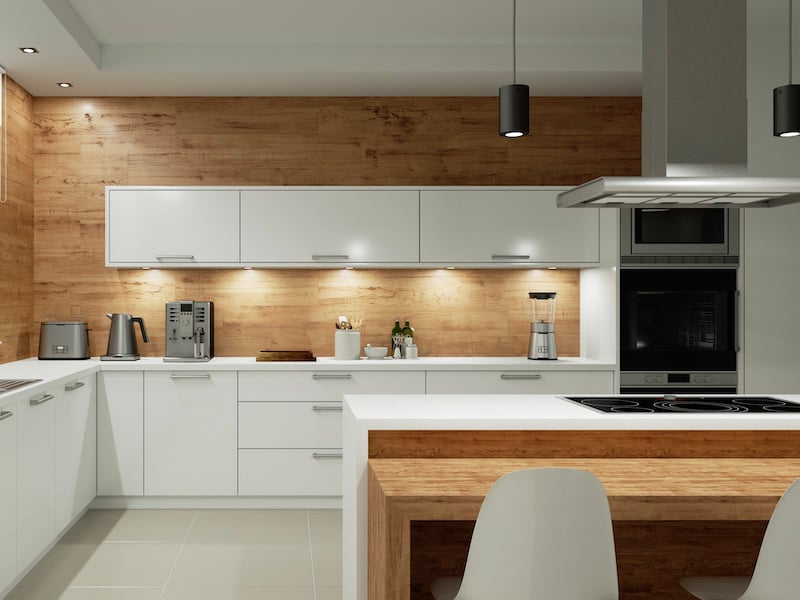
- Task lighting focuses on countertops, the cooktop and the sink, with under-cabinet strips eliminating shadows where you prepare food.
- Ambient lighting, typically from recessed or ceiling-mounted fixtures, provides overall brightness.
- Accent lighting highlights architectural details and items displayed in glass-front or open cabinetry.
- Decorative lighting, such as pendants over an island or a chandelier above the table, serves as a focal point as well as a light source.
Wiring each type to a separate switch, with dimmers where possible, lets you adjust the mood from bright and practical while cooking to soft and relaxed during dinner. Bulbs labeled 2700K to 3000K produce a warm white light that makes food look appealing and brings out the true colors of wood, stone, and painted cabinetry.
8. Aging In Place and Accessibility
If you want to stay in your home as you age, consider incorporating Universal Design as you plan your new kitchen. This approach creates spaces that people of all ages and abilities can use with ease. Arrange the appliances and sink to reduce the number of steps between them. A two-tiered island lets you work standing or seated, and upper cabinets mounted slightly lower than standard, with doors that open with little effort, keep dishes and glassware accessible without a step stool. Lever-style faucet handles and D-shaped pulls are also easier to grip than small knobs.
Flooring deserves attention too. A slip-resistant surface helps prevent falls when the floor is wet, and flush thresholds between rooms remove tripping hazards. Many of these features benefit everyone in the household, and building them in now is far simpler than adding them later. For a detailed look, read our guide to remodeling for aging in place.
Bringing It All Together
Designing a new kitchen involves making many decisions, and an experienced homebuilder you trust can help you sort through each one. Share in detail how your family uses the kitchen now and what you would like to change. Staying open to suggestions along the way leads to some of the best ideas.
At Meridian Homes, we specialize in luxury remodeling and custom home building in the Washington, DC area. Our mission is to create exceptional residences that exceed expectations. Our highly personalized design process and careful management of every project have earned us a reputation over many years for outstanding client service and solid, beautiful craftsmanship. Contact us today to begin your custom home or remodeling project.