
Understanding the Full Process Helps You Set Realistic Expectations and Achieve the Results You Want
One of the most common misconceptions homeowners bring to a remodeling project is that the work begins quickly. In reality, the time between a first conversation with a design-build firm and the completion of construction is almost always longer than anticipated — and for good reason. A quality remodeling project moves through several distinct phases before any work begins on site, and each one serves a purpose. Understanding what those phases involve, and why they require the time they do, is the foundation for a project that finishes when you need it and delivers results that meet your expectations.
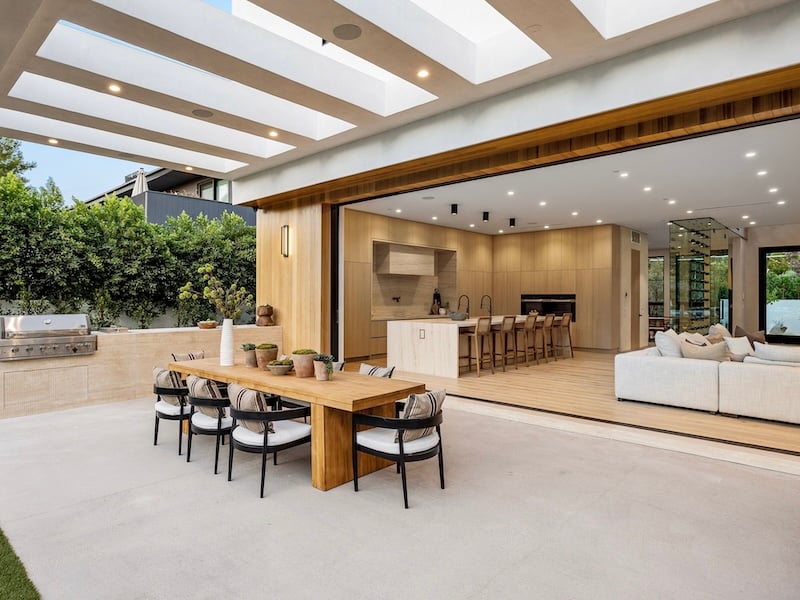
Remodeling vs. Renovating: Why the Distinction Matters
The terms “renovation” and “remodeling” are used interchangeably, but they describe meaningfully different scopes of work — and that difference directly affects how long a project takes. Our article on the difference between remodeling and renovating explores this in detail, but the distinction that matters most for planning purposes is this:
A renovation updates or refreshes what is already in place. Cabinets refaced in their existing locations, countertops replaced without moving the plumbing, new fixtures installed where the old ones were — these improve a space’s appearance without altering its layout or structure. Renovations can often be completed more quickly because they do not require architectural drawings, structural engineering, or permitting at the scale that structural work demands.
Remodeling goes further. When a kitchen’s layout is reconfigured, when walls come out to open a floor plan, when space is added through an addition or converted from one use to another — that is a remodel. It requires design and planning, the coordination of multiple skilled trades working in a specific order and building permits from the relevant jurisdiction. This is why a remodeling project has a fundamentally different timeline than a refresh of the same space, regardless of the room involved.

The Three Phases of a Remodeling Project
Every remodeling project Meridian Homes undertakes — whether a kitchen transformation, a home addition, or a basement conversion — moves through three phases before completion: design and planning, materials selections, and construction. Every phase depends on what the preceding one established, and all three require adequate time to execute properly.
Design and Planning
The design phase begins with an in-depth conversation about how you currently use your home, what you want to change, and your budget. A Design and Specifications Agreement formalizes the scope of work, and architectural drawings translate your vision into a plan from which construction can proceed. For projects involving additions or structural modifications, consultation with engineers is part of this process as well. Decisions deferred here tend to resurface during construction as change orders — each of which adds cost and time. The design phase deserves time and the care it requires.
Materials Selections
Once the design is established, every finish and material going into the project must be selected and priced before construction begins. This covers every surface, fixture, and system specified in the scope — and must address all spaces included in the project. Selections must be finalized in advance so that materials can be ordered and on-site when the construction process requires them. Making changes after construction begins adds delays and costs that could have been avoided entirely.
Construction
With design complete, selections finalized, and a Construction Agreement signed, your builder obtains all required building permits from the relevant jurisdiction. In the Washington, DC area, permitting timelines vary considerably — from several weeks for contained interior projects to several months for more complex work. Once permits are secured, construction proceeds through an ordered progression of trades: demolition, rough framing, mechanical, electrical and plumbing rough-in, inspections, insulation, drywall, cabinetry, tile, finish carpentry, painting, and fixture installation — each contingent on the completion of the preceding one.
Taken together, these three phases mean that even a mid-sized remodeling project typically spans several months or longer from start to finish. Larger or more complex projects require more time. Accounting for this reality from the outset is the most effective foundation for a project that is completed on schedule.

Kitchen Remodels
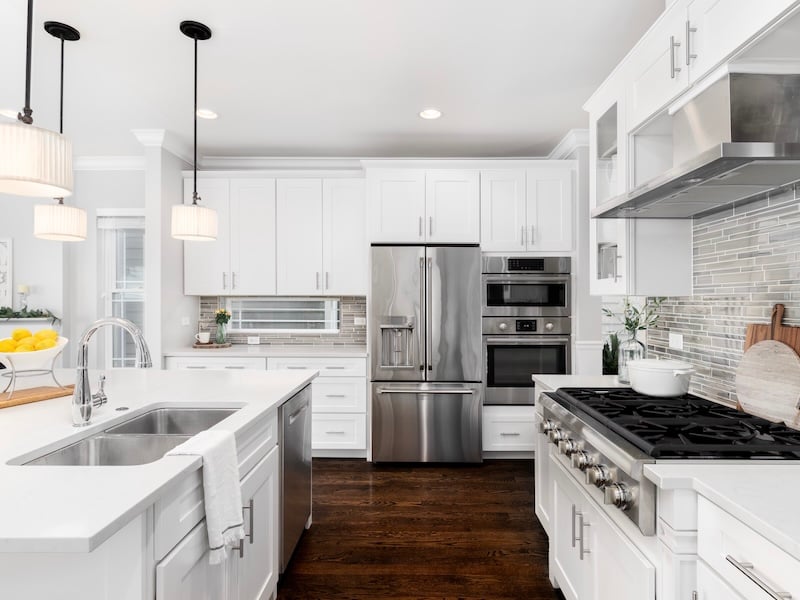
The kitchen is the center of daily family life — where meals are prepared, homework gets done, and the household naturally gathers at the beginning and end of each day. When the layout no longer supports how the family moves through the space, when storage or counter space falls short of what the kitchen actually demands, or when an outdated configuration makes routine tasks harder than they should be, the case for remodeling makes itself. A well-planned kitchen remodel resolves those frictions permanently.
It is also among the most complex single-room projects a homeowner can undertake. Each decision made during the design and selections phase — cabinet configuration, appliance placement and specifications, countertop selection, tile, lighting plan, and flooring — affects the others and must be resolved as a cohesive whole before work begins. Construction then advances through the trades in turn, with each stage dependent on the one before it.
A kitchen remodel of meaningful scope typically requires six to eight weeks for design and selections, followed by two to three months of construction — sometimes longer for more extensive projects. Add permitting time, and the total window from first meeting to a finished kitchen is four to six months at minimum. For families aiming to host Thanksgiving dinner or entertain through the December holidays in a completed space, working backward from those dates makes the urgency of an early start clear.
Bathroom Remodels
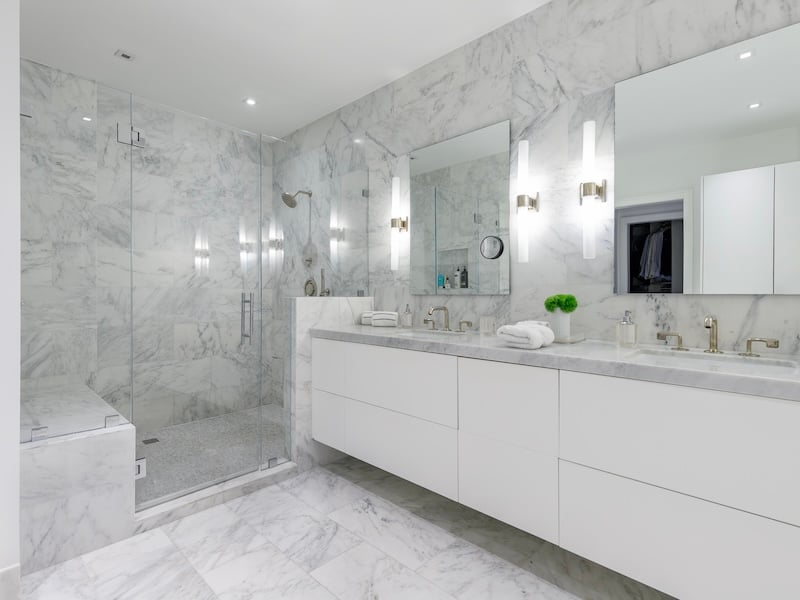
A bathroom, though modest in size, draws on nearly every trade in the building process when remodeled. The work proceeds in a set order — waterproofing and pan, plumbing rough-in, electrical, tile, millwork, and fixture installation — and the curing times for mortar and grout mean that certain steps cannot be accelerated. The number of decisions required during design and selections is substantial relative to the room’s square footage: tile for the floor, walls, and shower; cabinetry; plumbing fixtures; shower enclosure; lighting; mirrors; and hardware — all of which must be finalized before work begins.
From initial design meeting to completion, a bathroom remodel realistically takes three to five months. The case for undertaking one begins not with guests but with the people who use the space every day. A primary suite where two people share a single vanity, a shower that has never functioned as intended, or a hall bath that creates a daily bottleneck for a busy family are the kinds of issues that compound over time. A children’s bathroom designed for young children and never updated to suit the teenagers or adults they have become presents a similar misalignment between a space and the people it serves. A well-planned remodel resolves these issues at their source — and its benefits extend naturally to visitors as well. A bathroom that is comfortable, well-appointed, and current reflects favorably on the home as a whole. If updating a bathroom has been on your list for longer than it should have been, the right time to begin the design process is well before that space, used daily or for guests, falls further behind its potential.
Home Additions
When a home’s existing floor plan cannot accommodate how a family wants to live, an addition offers more than additional square footage — it creates the opportunity to reorganize the home in ways that improve everyday life. What that looks like depends on what the home is missing. Some families need more communal space: a larger family room with room to spread out, a kitchen expansion that gives everyone room to move while meals are being prepared, or both. Others need more private quarters: a new primary suite designed from scratch with the right closet configuration, a bathroom planned without the constraints of an existing layout, and a position within the home that reflects how the family actually lives day to day. When the primary suite moves to a new addition, the existing space, already situated for privacy and typically equipped with its own bathroom, becomes a well-appointed, self-contained area that serves guests or other family members comfortably. The most effective additions often accomplish more than one of these goals at once, reorganizing the home in ways that improve daily function while also expanding its capacity.
Home additions carry the longest timelines of any project type discussed here. The design process is more involved and requires structural engineering input. Permitting for an addition encompasses exterior changes to the home, review of local zoning setbacks and lot coverage requirements, and a more thorough municipal review process than interior work typically requires. Construction spans more months than any contained interior project. Homeowners with a specific target occupancy date should generally plan to begin the design process six to nine months in advance of a desired start date — more for larger or architecturally complex projects. For this scope of work, early engagement is not a preference but a practical requirement.
Basement Remodels
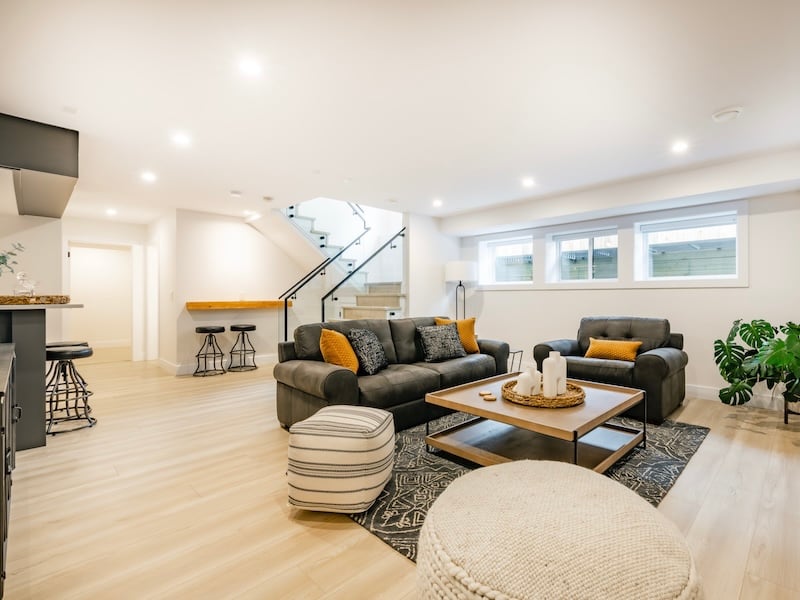
A finished basement dramatically expands what a home can offer without altering its exterior appearance. The possibilities reflect the full range of how a family lives: a recreation room for children and teenagers, a home theater or media room, a gym or fitness space, a properly equipped laundry room with ample storage and folding area, a home office removed from the activity of the main floor — or a combination of uses distributed thoughtfully across the lower level. For families who host overnight visitors regularly, a self-contained suite with a bedroom and full bathroom gives guests genuine privacy while keeping the household’s daily routine intact. A well-conceived lower level can serve all of these purposes without any single use crowding out the others.
Basements require particular care during the design phase. Ceiling heights and mechanical systems must be evaluated and accommodated, egress requirements for any sleeping spaces must be met, and any history of moisture must be addressed before construction proceeds. Permitting for a basement project is generally less involved than for an addition, though it still adds meaningful time to the overall schedule. Construction typically runs two to four months, placing the total span from design phase to completion at four to seven months — which means that homeowners with a specific target date should engage a builder well ahead of time.
Attic Remodels
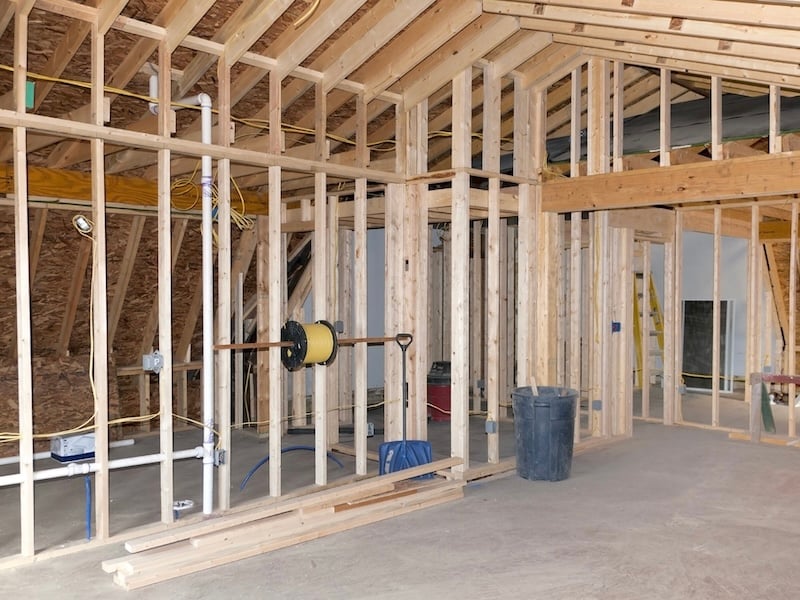
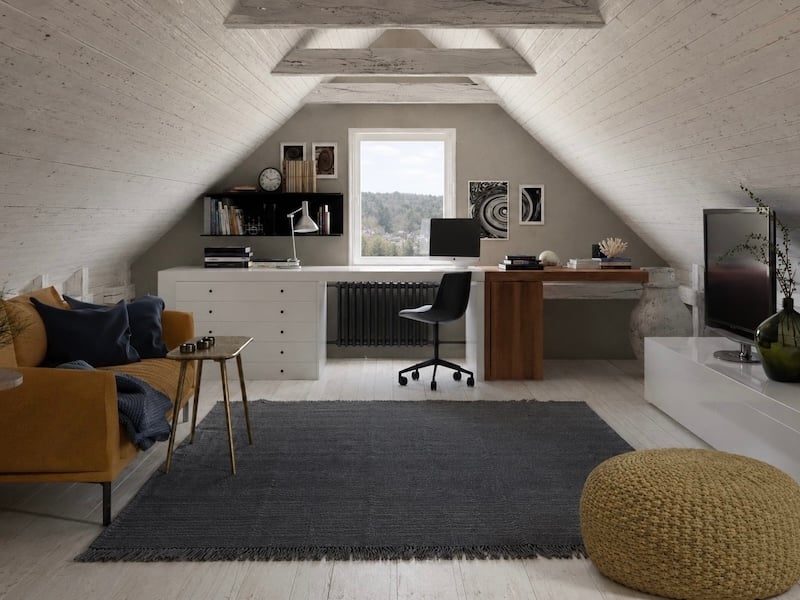
The attic represents one of the more overlooked opportunities for expanding what a home can offer its residents. Unlike a full addition, an attic conversion works within the existing structure and footprint, often without the permitting complexity or exterior changes that new construction requires. Our article on attic remodeling ideas details ten possibilities for what the space can become: a primary suite, a bedroom for a child or teenager who needs more space and privacy, a family room or media space removed from the main floor, a home office that provides genuine separation from household activity, or a reading room or studio centered on a specific pursuit. For multigenerational households, a well-configured attic can accommodate a small apartment — with a bedroom, bathroom, and sitting area — that gives another family member a meaningful degree of independent living without its own exterior entrance.
Before any of those possibilities can be realized, the structural and regulatory requirements that govern the conversion must be worked through during the design phase. Most jurisdictions specify a minimum ceiling height in at least a portion of the converted space, a code-compliant staircase with adequate headroom and width, and an egress window or secondary exit for fire safety. The existing floor structure typically requires reinforcement to carry residential loads. Electrical service must be extended to the new level, plumbing must be brought up if a bathroom is part of the plan, and climate control — proper insulation, ventilation, and HVAC — is essential for a space exposed to temperature swings that other floors never experience. These are not obstacles to an attic project; they are the design phase's central agenda, and working through them early is what makes the finished space functional and code compliant. A well-planned attic conversion typically runs three to six months from initial design to completion, with more complex projects requiring additional time for permitting and structural work.
Designing Rooms That Work Harder
Not every solution to a home’s limitations requires new square footage. Some of the most effective remodeling work involves making existing rooms more capable — designing spaces that serve their primary purpose well every day and can adapt, without compromise, when circumstances call for something different.
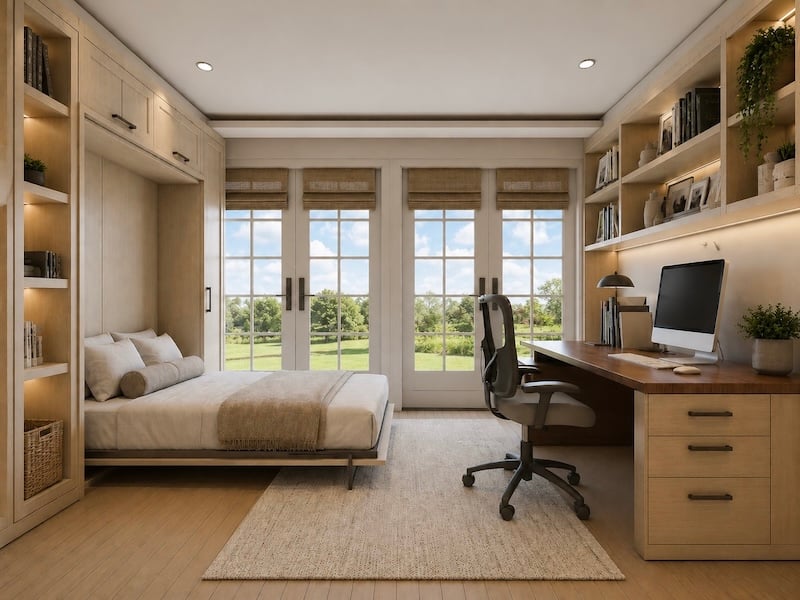
A home office can be designed from the outset to accommodate guests when needed, with a Murphy bed integrated into a wall of built-in shelving and storage rather than appearing as something added as an afterthought. A lower-level media room can include a discreet sleeping alcove without sacrificing its day-to-day function. A study or library can be configured with a convertible sleeping option alongside a dedicated bathroom that serves the household at large when guests are not present. The principle applies well beyond guest accommodations: rooms designed to serve multiple purposes — a home gym that doubles as a home theater, a playroom that transitions into a homework space as children grow — require the same intentional planning. Layout, lighting, storage, and acoustic privacy must all be considered from the start, because none of these elements can be effectively addressed after the fact.
This kind of project also presents an opportunity to add a bathroom where none currently exists, improving the home well beyond the needs of any single use. Timelines for this type of work generally run four to eight months from initial design to completion, making it among the more achievable options for homeowners with a specific occupancy or use date in mind.
Planning Around Your Life
Understanding the remodeling timeline is only part of the picture. Equally important is thinking clearly about how the construction process will affect the household while it is underway. A kitchen remodel means cooking elsewhere for weeks or months. Work in a bathroom temporarily reduces the number of functional ones available to the family. An addition or basement project brings contractors into the house on a regular schedule and involves noise and dust that can extend well beyond the immediate construction zone.
The best time to undertake a major remodel is when that disruption can be managed — and the most reliable way to manage it is to begin planning well in advance. If you want a finished kitchen before Thanksgiving, a reconfigured home ready for the December holidays, or a basement conversion complete for the family’s next major occasion, the critical question is not when construction should get underway, but when the design process should start. That process begins with a signed Design and Specifications Agreement and a design fee — a commitment of both time and resources to the meetings, selections, and decisions that will govern every aspect of what gets built. None of that work happens on a construction site. It is a process of collaboration and careful decision-making that takes place months before the first trade arrives, and it is the essential step without which no specific completion date is achievable.
The homeowners who have what they want at the time they envisioned are the ones who started that conversation early enough to make it possible.

At Meridian Homes, we specialize in luxury remodeling and custom home building in the Washington, DC area. Our mission is to create exceptional residences that exceed expectations. Our highly personalized design process and careful management of every project have earned us a reputation over many years for outstanding client service and solid, beautiful craftsmanship. Contact us today to begin your custom home or remodeling project.