
Understanding Wood Species, Grain Patterns, Plank Sizes, Finishes, And Installation Considerations
Hardwood flooring remains one of the most widely used materials in residential construction because it works well with a range of architectural and interior design styles, from traditional to modern. Selecting the right floor involves more than choosing a wood species or stain. Differences in flooring type, grain pattern, plank size, finishes, and installation methods all influence how the floor will appear in the space and how it will perform over time. Understanding these factors can help homeowners make informed decisions when choosing hardwood flooring for a custom home or remodeling project.
Types Of Hardwood Flooring
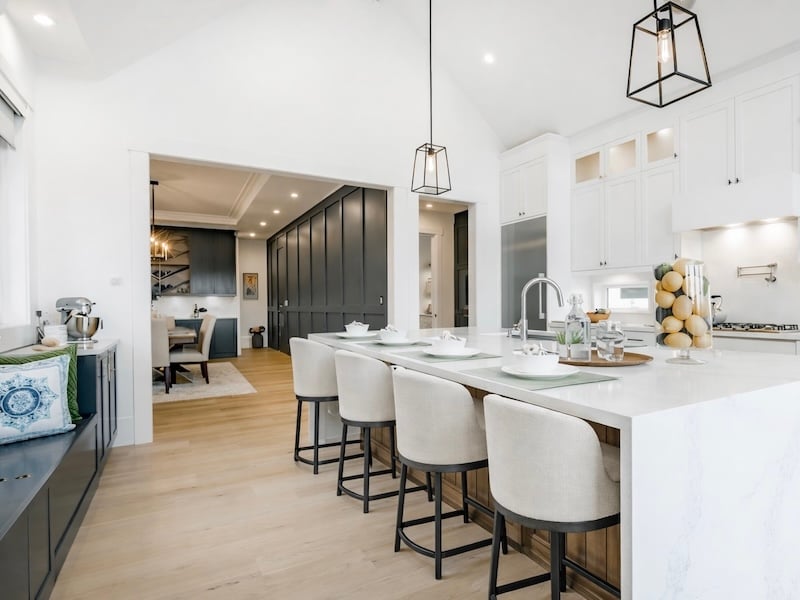
When selecting hardwood flooring, one of the first decisions is whether to use solid wood or engineered wood. Both options use real wood, but they differ in construction, performance, and where they can be installed. The right choice depends on where the flooring will be placed, the moisture conditions in that area, and whether you want the option to refinish the floor in the future.
1. Solid Wood
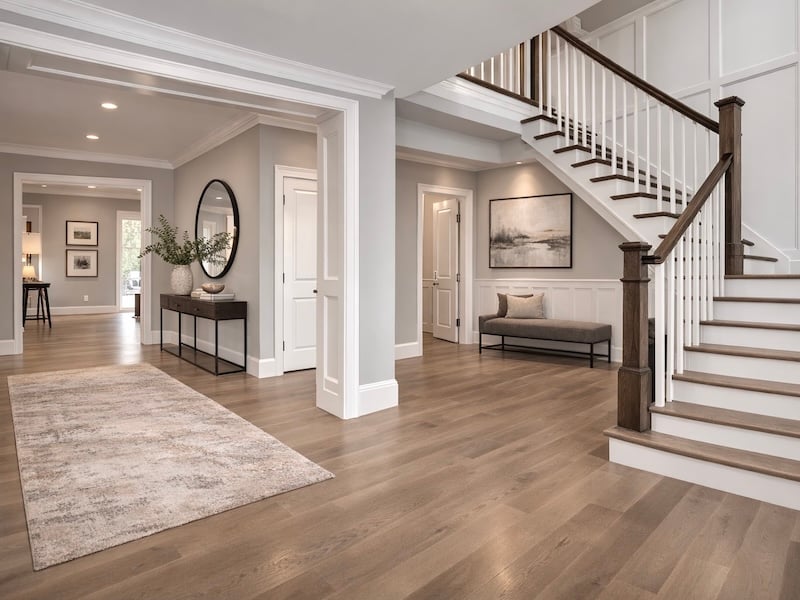
Solid hardwood flooring is crafted from a single piece of wood, typically ¾ of an inch thick. This traditional material is valued for its long lifespan and durability. One of the major benefits of solid wood is that it can be sanded and refinished multiple times over the years, allowing the floor to be restored if it becomes worn or damaged.
Solid hardwood is more affected by humidity and damp conditions than engineered flooring. Because it can expand or contract when exposed to excess moisture, it is typically installed on the main and upper floors rather than in basements or other below-grade areas. Solid hardwood is best installed over plywood subflooring using nails, staples, or glue—not over concrete, since concrete can retain moisture that may affect the wood.
2. Engineered Wood
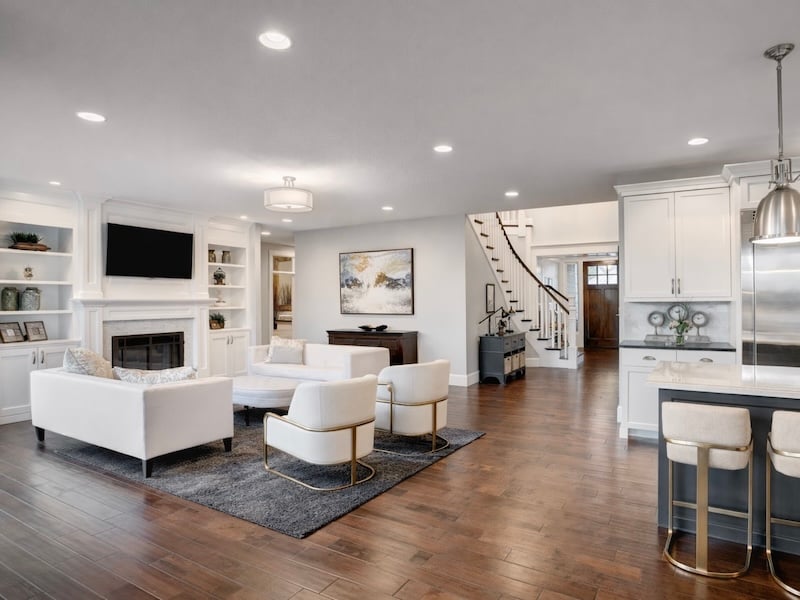
Engineered hardwood is an alternative to solid wood flooring that uses a top layer of real hardwood bonded to multiple layers of plywood or composite backing. This layered construction makes the material more stable and less affected by changes in humidity, allowing it to be used in areas where solid hardwood is not recommended, including basements, kitchens, and over concrete slabs.
Another advantage of engineered wood is its installation versatility. It can be glued to a concrete slab or subfloor, floated over an underlayment, or installed over radiant heat systems. However, not all engineered flooring is the same quality. Some lower-grade products have very thin surface layers that cannot be sanded or refinished. Higher-quality engineered flooring has a thicker wear layer, which may allow the floor to be refinished at least once if needed.
Sustainability And Material Sourcing
If environmental considerations are a priority, there are several ways to choose hardwood flooring from responsibly managed sources. One of the most widely recognized standards is certification from the Forest Stewardship Council (FSC). Products with FSC certification come from forests that are managed according to established environmental and social guidelines. Certification from the Sustainable Forestry Initiative (SFI) is also commonly used in North America and supports responsible forestry practices and long-term resource management.
In addition to flooring produced from certified sources, reclaimed wood can also be used. Reclaimed lumber may come from older homes, barns, or industrial buildings, and using these materials reduces the need for additional harvesting. Reclaimed flooring often shows grain variation and aging characteristics that are not typically found in recently milled wood.
Bamboo flooring is sometimes selected for sustainability as well. Although it is not technically a hardwood, bamboo is a rapidly renewable grass that reaches maturity much faster than most tree species. Its consistent grain and clean appearance make it a good fit for interiors with a more modern or contemporary design.
Selecting certified, reclaimed, or renewable materials can be a practical way to address environmental concerns while maintaining the level of finish expected in a custom home or remodeling project.
Wood Species
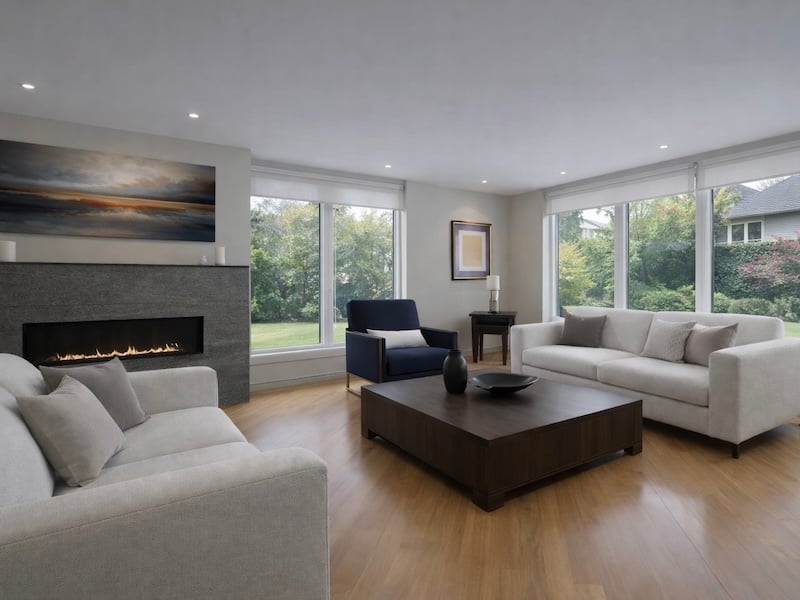
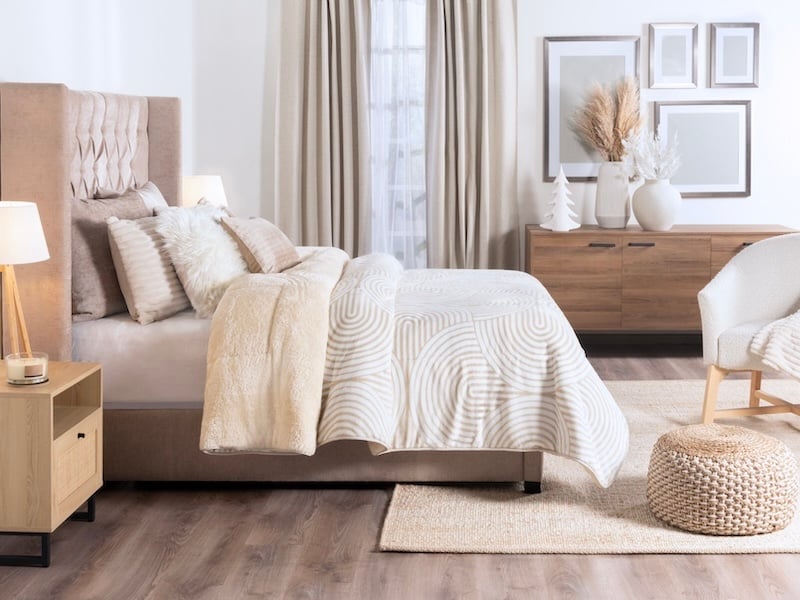
Wood flooring is available in many species, each with different grain patterns, color tones, and hardness levels. Red oak and white oak are among the most commonly used choices in residential construction because they are durable, readily available, and accept stain evenly. White oak has a more uniform grain and slightly cooler color, while red oak has a more pronounced grain pattern and a warmer tone.
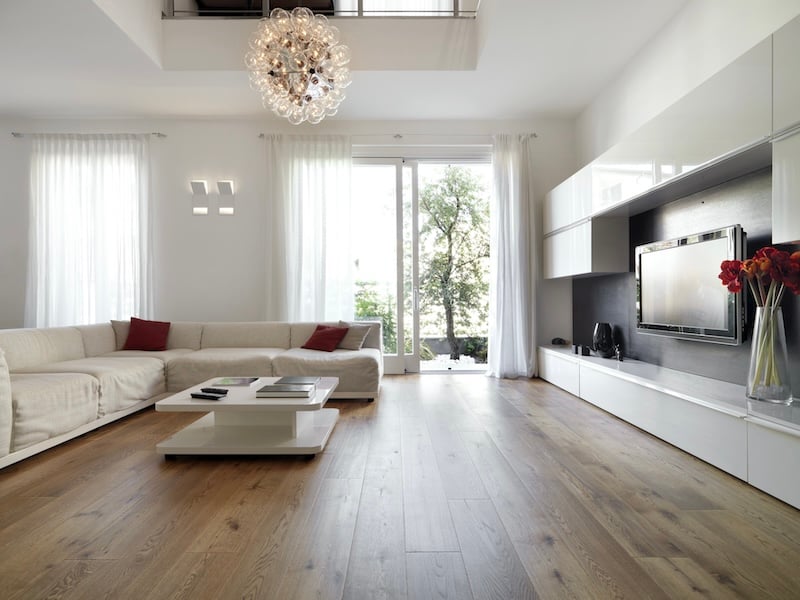
In more contemporary interiors, species with a consistent grain and more uniform color are often preferred. Maple and ash both have lighter tones and a smoother appearance that work well in modern or minimalist spaces. Walnut is also used in contemporary homes when a darker floor is desired, since it has a rich color with relatively even grain.
Transitional interiors often use oak because it adapts well to a wide range of stain colors and finishes. Both red oak and white oak can be finished in lighter or darker tones, making them a flexible choice when the design combines traditional and modern elements.
In more traditional homes, species with stronger grain variation are sometimes selected. Hickory is one of the hardest domestic woods and has a bold, natural grain pattern that suits rustic or classic interiors. Cherry is another traditional choice, known for its reddish color that deepens over time.
Species selection also affects how the floor performs over time. Harder woods generally resist dents and wear better, which can be important in high-traffic areas or in homes with pets. Softer species may show wear more easily but are sometimes chosen for their color or grain pattern.
Choosing the right species involves considering both appearance and durability so the flooring remains consistent with the design of the home while holding up to everyday use.
Grain Pattern
The grain pattern of hardwood flooring is determined by how the log is cut during milling. The cutting method affects the direction of the grain, the amount of variation, and the overall stability of the boards. The four most common cuts are plain-sawn, rift-sawn, quarter-sawn, and live-sawn.
Plain-sawn lumber is the most commonly used cut and produces the familiar cathedral or wavy grain seen in many hardwood floors. Rift-sawn wood has a straighter grain with very little variation, creating a more uniform surface that is often used in contemporary or modern interiors. Quarter-sawn wood produces a tighter, more consistent grain and may show distinctive flecking, especially in oak. This cut is often selected when a more formal or traditional appearance is desired. Live-sawn boards include a mix of grain patterns from across the log, resulting in wider planks with natural variation.
Grain pattern affects both the appearance of the floor and how consistent it looks once installed. Floors with more variation tend to highlight the natural character of the wood, while straighter grain patterns create a more uniform surface. Selecting the right cut helps ensure the flooring works with the architectural style of the home and the level of formality in the interior design.
Plank Width And Length
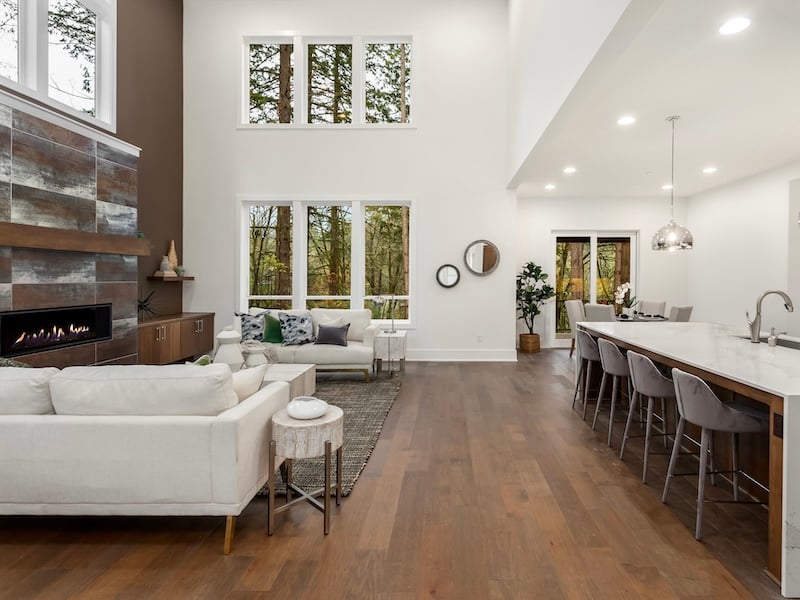
Standard hardwood flooring is typically made with planks ranging from about 2¼ inches to 3¼ inches in width. These standard-width boards create a traditional, uniform floor pattern and are commonly used in many homes. Wider planks are also available, sometimes exceeding 8 to 10 inches, and are often selected for larger rooms where fewer seams create a more expansive look.
Plank length influences how the floor reads once installed. Longer boards help maintain proper scale in larger spaces and are often used in contemporary or open-plan interiors, where a more continuous surface is preferred. Shorter and narrower boards create a more traditional pattern with more visible joints, which can work well in more formal or detailed interiors. Wider and longer planks usually cost more because they require larger pieces of lumber and more careful installation, but they are often selected when a cleaner, less segmented floor pattern is desired.
Stains And Finishes
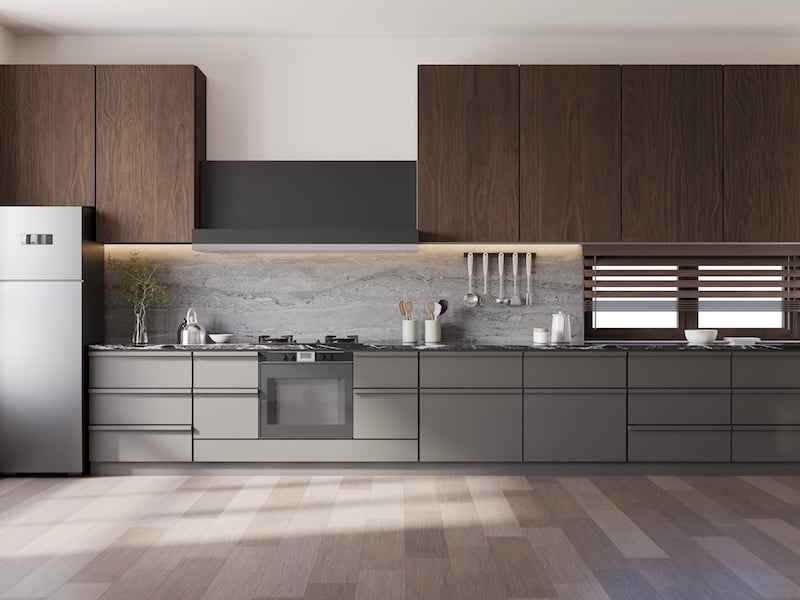
Hardwood flooring—whether solid or engineered—is available in two primary forms: unfinished and pre-finished. With unfinished hardwood, the planks are installed first and then sanded, stained, and sealed on-site. This method allows the stain color to be customized after installation and results in a smooth, seamless appearance without visible bevels between boards. The process, however, takes more time, produces dust during sanding, and may require the space to remain unused until the finish has cured.
Pre-finished hardwood is completed at the factory before installation. Each plank is sanded, stained, and sealed under controlled conditions, resulting in a consistent finish and a faster installation process. Because the finish is applied before delivery, the color and sheen are predetermined, which can simplify selection and reduce the amount of work required in the home. Since the boards are finished individually, a slight bevel between planks may remain visible after installation, which creates more definition between boards than site-finished flooring.
With unfinished flooring, the protective finish applied after staining must also be chosen. The two most common finishes are polyurethane and oil. Polyurethane creates a durable surface that resists wear and moisture, making it a practical choice for heavily used areas. Oil finishes produce a softer, more natural surface that can be easier to repair but may require more maintenance over time.
Surface treatments can further change the character of the floor. High-gloss finishes create a more reflective surface, while satin or matte finishes reduce shine and show less wear. Hand-scraped or wire-brushed textures add variation to the surface and are often used in homes with more traditional or rustic detailing. Selecting the right stain, sheen, and texture helps ensure the flooring remains consistent with the overall design of the home while holding up well under normal household wear.
Volatile Organic Compounds (VOCs)
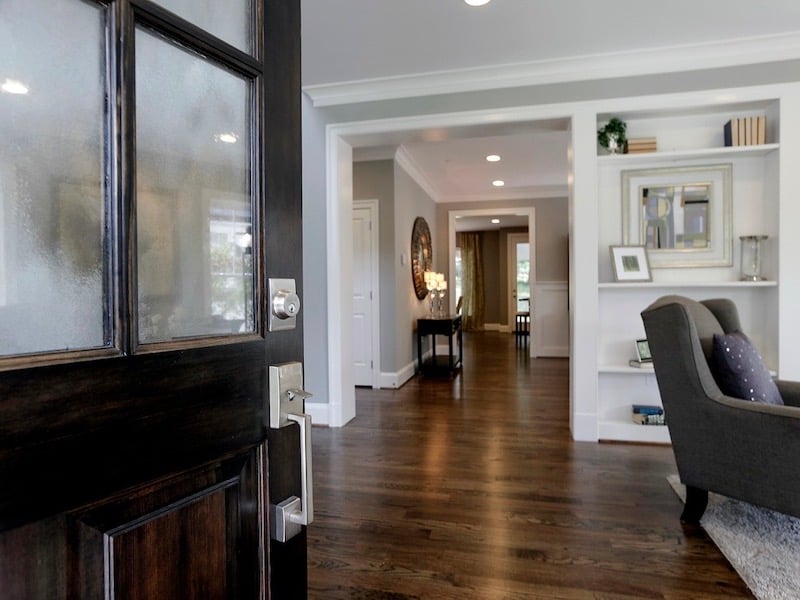
Volatile Organic Compounds (VOCs) are gases released from certain chemicals found in adhesives, finishes, and sealants used in many building materials. In enclosed spaces, these emissions can affect indoor air quality, particularly during and shortly after installation. In hardwood flooring, VOCs are most often associated with the adhesives and finishes used during manufacturing or site finishing.
Some engineered wood products use adhesives that contain formaldehyde, which can release small amounts of VOCs after installation. Many manufacturers now offer low-VOC products that use alternative binders and meet established indoor air quality standards.
Floor finishes can also be a source of VOCs. Oil-based polyurethane and other solvent-based coatings may release more emissions while curing. With pre-finished flooring, most finishing takes place at the factory, which limits the amount of off-gassing inside the home. Site-finished floors may produce more odor during installation because sanding, staining, and sealing are done in the house, but low-VOC and water-based finishes are widely available.
When selecting hardwood flooring, it is reasonable to ask about low-VOC adhesives, finishes, and certified products that meet recognized indoor air quality standards. These materials can help reduce odors during installation and limit airborne emissions after the flooring is installed, which may be important in tightly constructed or newly remodeled homes.
Cost Considerations
The cost of hardwood flooring can vary depending on the materials and installation methods selected. Several factors discussed above—such as flooring type, wood species, plank size, and finish—also affect the overall cost.
Engineered hardwood is often less expensive than solid hardwood in both material and installation. Its layered construction uses less hardwood, which can reduce manufacturing cost, and it can usually be installed more quickly, especially over concrete or radiant heat systems.
Wood species is another important factor. Common domestic species such as oak, maple, or ash are generally less expensive than imported or less readily available woods. Materials that are harder to source or require more selective milling typically cost more.
Plank width and length can also affect price. Wider and longer boards require larger pieces of lumber, more selective milling, and more precise installation, which can increase both material and labor costs.
Pre-finished flooring may cost less than unfinished flooring because the sanding, staining, and sealing are completed at the factory. This reduces the amount of labor required on-site and shortens installation time. Site-finished floors often require additional work in the home, which can increase both labor cost and project duration.
Because many variables affect price, hardwood flooring costs can vary significantly from one home to another. Reviewing these factors early in the planning process helps ensure the flooring selection aligns with both the design of the home and the overall budget.
At Meridian Homes, we specialize in luxury remodeling and custom home building in the Washington, DC area. Our mission is to create exceptional residences that exceed expectations. Our highly personalized design process and careful management of every project have earned us a reputation over many years for outstanding client service and solid, beautiful craftsmanship. Contact us today to begin your custom home or remodeling project.