
How To Make Your Home More Convenient, Safe, And Functional
The primary purpose of a home elevator is to make moving between floors easier and safer. It can simplify everyday tasks such as carrying groceries from the garage to the kitchen, provide reliable access for family members with mobility challenges, and support homeowners who wish to remain in their homes as their needs change over time. By improving accessibility, an elevator adds meaningful functionality to a multi-level residence.
Residential elevators are available in a variety of styles to accommodate different floor plans and structural conditions. Some systems are best suited for new construction, while others are designed for installation in existing homes. With guidance from an experienced homebuilder, homeowners can select an option that fits their space, aligns with their priorities, and stays within their budget.
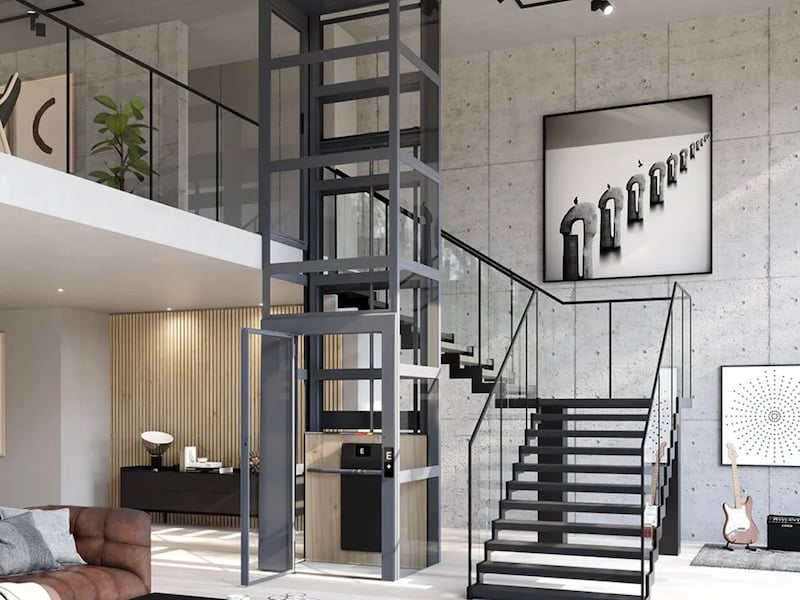
Photo Courtesy of Area Access Elevators and Stairlifts
1. Shaftless Elevator
Shaftless elevators offer a practical solution for homeowners who want improved access between two levels without major structural changes. Their compact design allows them to be installed in many areas of an existing home, making them well suited for retrofit projects where space is limited.
Designed to carry one or two passengers, shaftless elevators travel between two floors on guide rails through a floor opening. Because they do not require a full enclosure, pit, or separate machine room, installation is typically simpler than with traditional elevator systems. Built-in safety features, including obstruction sensors and pressure-operated controls that stop the cab when released, help ensure reliable and secure operation.
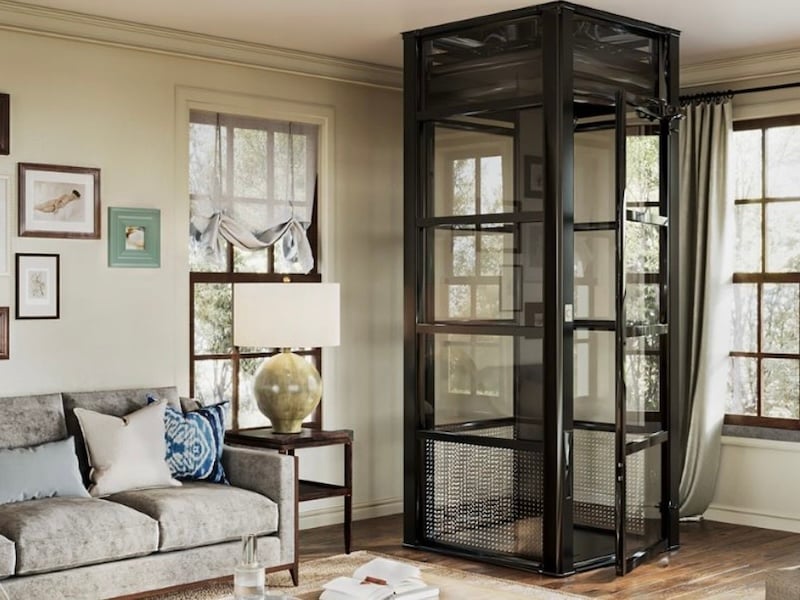
Photo Courtesy of Area Access Elevators and Stairlifts
2. Pneumatic or Vacuum Elevator
Pneumatic elevators use air pressure to move the cab within a transparent, tube-shaped enclosure, creating a distinctive and modern look. Available in one-, two-, and three-passenger configurations, including wheelchair-accessible models, these systems can accommodate a range of household needs.
Because the cab is raised and lowered using controlled air pressure, pneumatic elevators operate efficiently, though some sound is produced during travel. Valves and turbines regulate pressure at each landing to ensure smooth, controlled stops. Built-in safety features and backup batteries allow the brakes to engage during a power outage. With no requirement for a pit, shaft, or separate machine room, pneumatic elevators can be installed in both new homes and existing residences, and they can serve up to five floors.
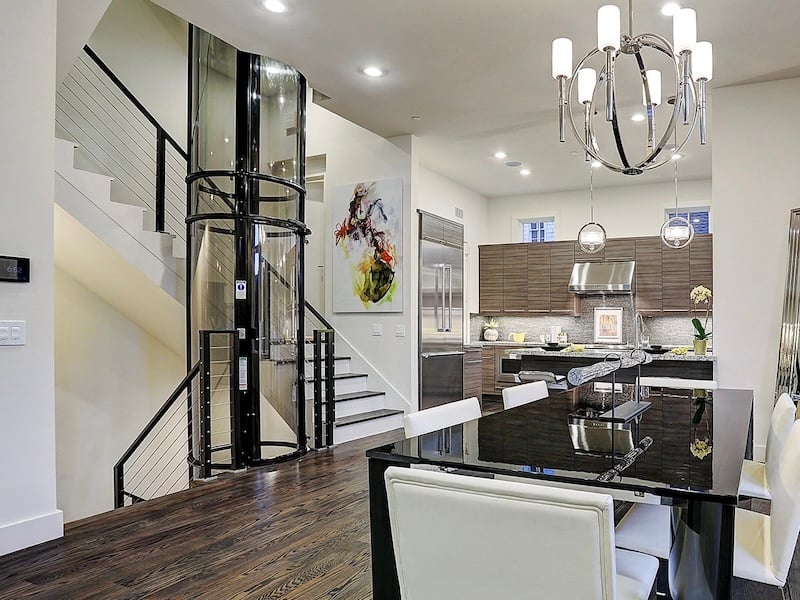
Photo Courtesy of Area Access Elevators and Stairlifts
3. Hydraulic Elevator
Hydraulic elevators are known for their quiet operation and smooth performance, making them a reliable option for multi-level homes with higher usage needs. These systems are designed to carry heavier loads, with capacities typically reaching up to 750 pounds, depending on local code limits.
The system operates using an electric pump that moves pressurized fluid into a cylinder, raising the cab by pushing a connected piston upward. When descending, the pressure is released in a controlled manner. Because this type of elevator requires a full enclosure, a pit at the lowest level, and a separate machine room, it is most practical for new home construction. While installation costs are often lower than some alternatives, ongoing maintenance may be higher because the hydraulic fluid must be periodically replaced.
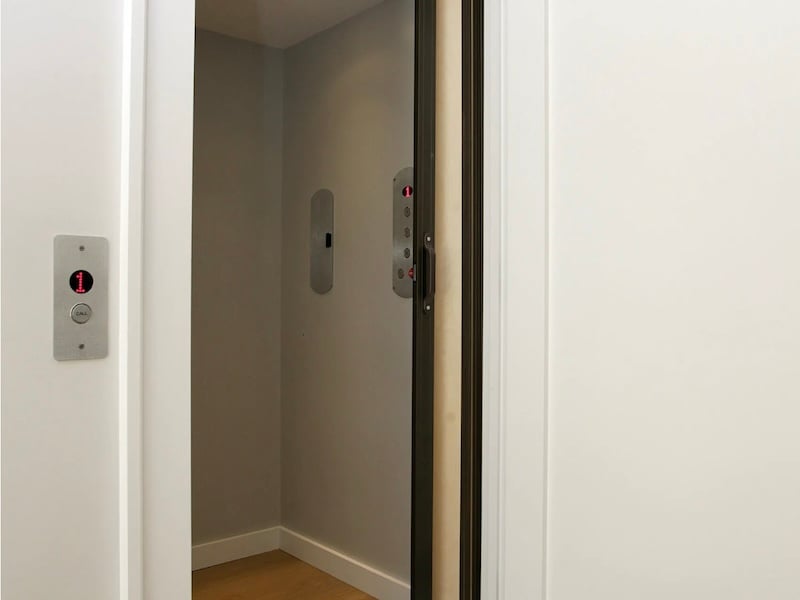
Photo Courtesy of Area Access Elevators and Stairlifts
4. Inline Gear Drive or Machine Room-Less (MRL) Elevator
Machine room-less elevators house the drive system and controller at the top of the shaft, eliminating the need for a separate mechanical room. This design can be a practical solution for homeowners who want a larger cab and access to multiple levels without dedicating additional space for equipment.
MRL systems provide a smooth, stable ride and can serve up to five landings. They also operate efficiently and include modern safety features. Because the motor is located within the shaft, servicing may be more involved, and some operational noise is possible. Since a pit is required at the lowest level, this type of elevator is best incorporated into the design of a new home.
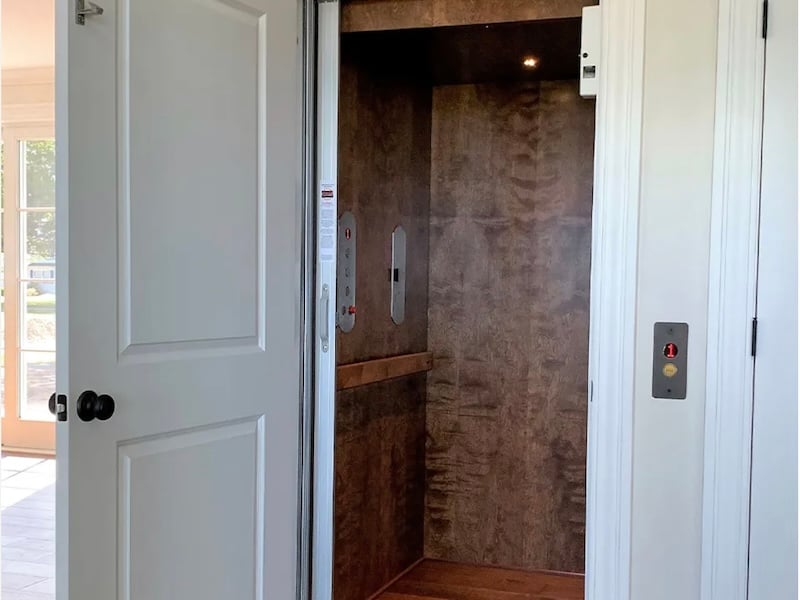
Photo Courtesy of Area Access Elevators and Stairlifts
5. Winding Drum Elevator
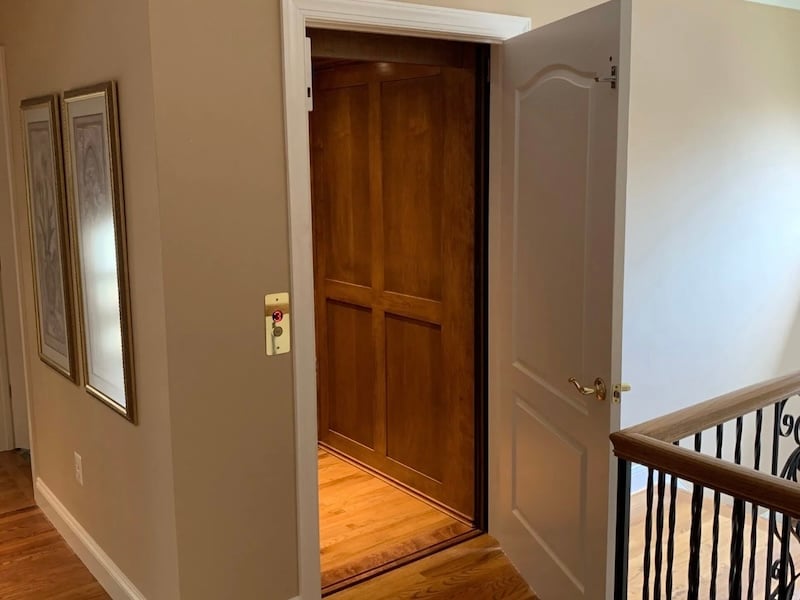
Winding drum elevators use an electric motor and a pulley-based hoisting system to move the cab between floors. These systems can serve up to five levels but require a shaft, a pit, and a dedicated machine room, making them better suited for new construction rather than retrofit projects.
Installation costs are often lower than with some other elevator types, though long-term maintenance expenses may increase if the cables stretch and need replacement. This option may appeal to homeowners who prioritize upfront affordability, have space for mechanical equipment, and are comfortable with a slightly louder, less refined ride.
 t
t
Photo Courtesy of Area Access Elevators and Stairlifts
Selecting the right residential elevator involves more than choosing a specific system. Factors such as available space, structural requirements, long-term accessibility needs, and overall budget all play an important role in determining the best solution. With thoughtful planning and expert guidance, a well-designed elevator can enhance how a home functions while supporting comfort, safety, and accessibility for years to come.
At Meridian Homes, we specialize in luxury remodeling and custom home building in the Washington, DC area. Our mission is to create exceptional residences that exceed expectations. Our highly personalized design process and careful management of every project have earned us a reputation over many years for outstanding client service and solid, beautiful craftsmanship. Contact us today to begin your custom home or remodeling project.